
More Than Learning Music
Every student walks into the music room with a different story.
Some have sung in choirs before. Others have never sung in front of another person. Some already understand musical notation, while others are seeing a staff and treble clef for the first time.
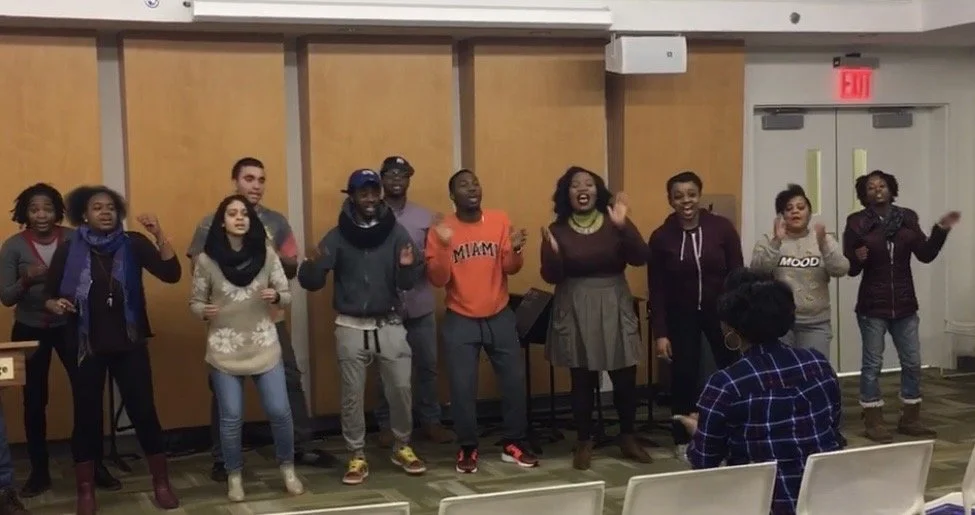
Bridge to Song meets students where they are. The classroom is a place where students are encouraged to ask questions, take risks, support one another, and discover abilities they may not have realized they had. Each student begins from a different place, and the learning builds from there.
Building Musical Understanding
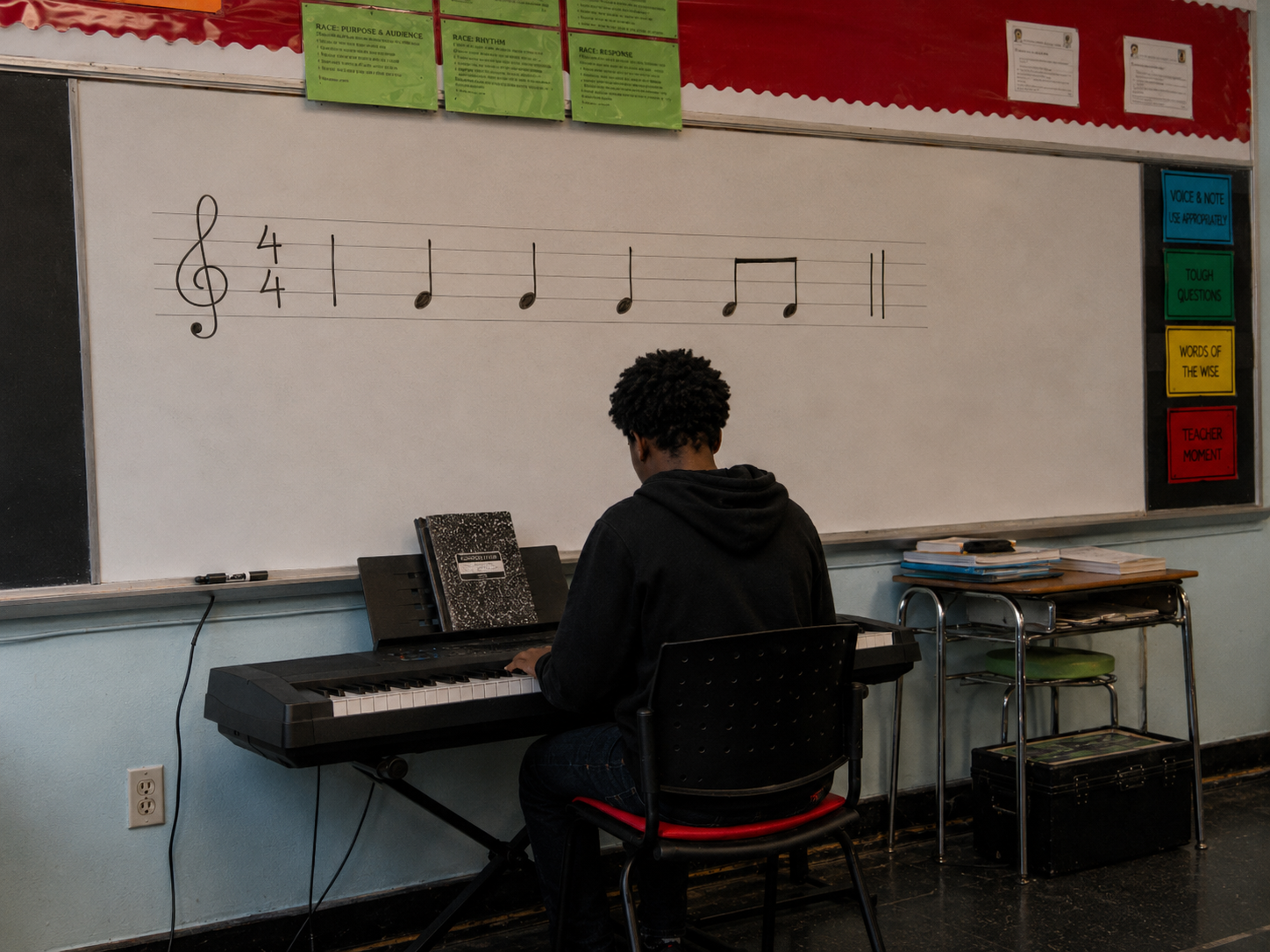
Students don't simply learn songs. They learn how music works.
Through singing, rhythm activities, movement, and bucket drumming, students develop the knowledge and skills that help them become thoughtful, independent musicians.
Throughout the program, students learn to:
Read rhythmic notation
Understand the treble clef and basic music symbols
Recognize melodic motifs and musical patterns
Develop rhythmic accuracy and steady beat
Perform confidently as part of an ensemble
Listen critically and respond musically to others
Every lesson builds on the last, helping students move from imitation to understanding.
Classroom Moment
While preparing a bucket drum performance of Rolling in the Deep, a high school sophomore who had never learned to read music raised his hand and asked if I could write the rhythm on the board so he would know "how that part goes." He no longer wanted to learn the part simply by watching someone else. He wanted to understand the notation for himself.
It was a simple question, but it represented something much bigger. For him, learning music had become more than playing the part correctly. He wanted to understand why it worked.
Finding Confidence
Growth often begins with one small step.
Many students arrive unsure of themselves. Some hesitate to sing. Others worry about making mistakes in front of their classmates.
As the year progresses, students begin participating more freely, volunteering answers, encouraging one another, and discovering confidence they didn't know they had.
For some, that journey leads to singing a solo for the very first time.
Student reflection
"My grandmother always told me I had a beautiful voice. I'm happy I finally got to show her."
High School Freshman
Growing Together
Music is one of the few subjects in which individual growth and teamwork occur simultaneously. As students rehearse together, they learn to listen, encourage one another, accept responsibility, and celebrate shared accomplishments. Those experiences often help students discover leadership in ways they didn't expect.
Classroom Moment
One high school sophomore became so invested in what the class was accomplishing that he encouraged his classmates to perform at a school event. He wanted the rest of the school to see what they had learned and how much they had grown together.
By the end of the year, his growth extended far beyond his musical skills. He had become a leader who encouraged others, took pride in the class's accomplishments, and helped his classmates believe they were ready to perform.
Beyond the Final Performance
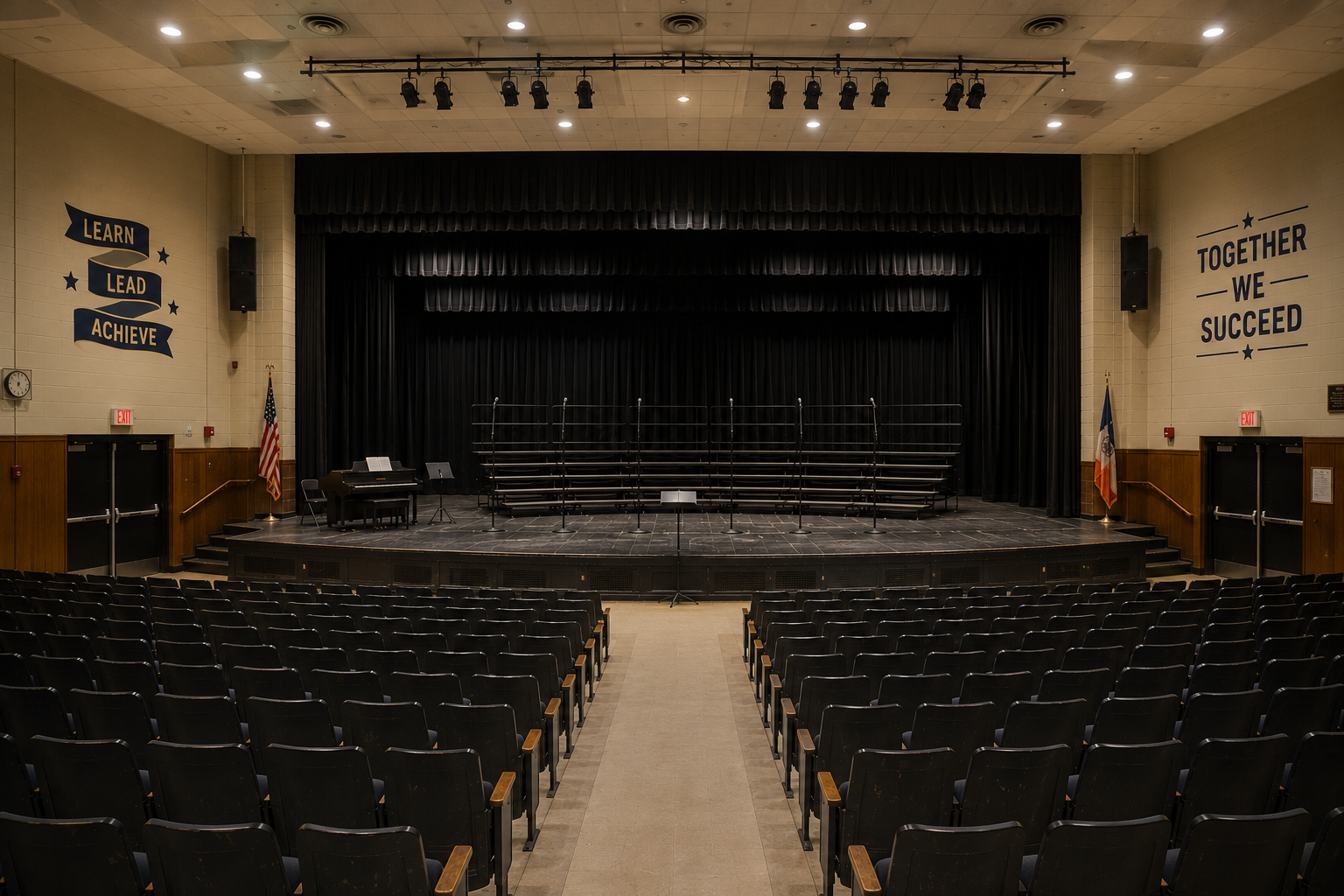
The final concert is an important milestone, but it is only one moment in a student's musical journey.
The lasting impact is found in everything that happens before the performance: the student who asks to understand the notation instead of simply copying it, the student who finds the confidence to sing alone for the first time, and the student who encourages an entire class to share what they have learned.
Those moments reflect the kind of growth that can’t be measured by applause alone. They are the experiences students carry with them long after the final rehearsal.
Every student deserves the opportunity to learn, create, and grow through music.